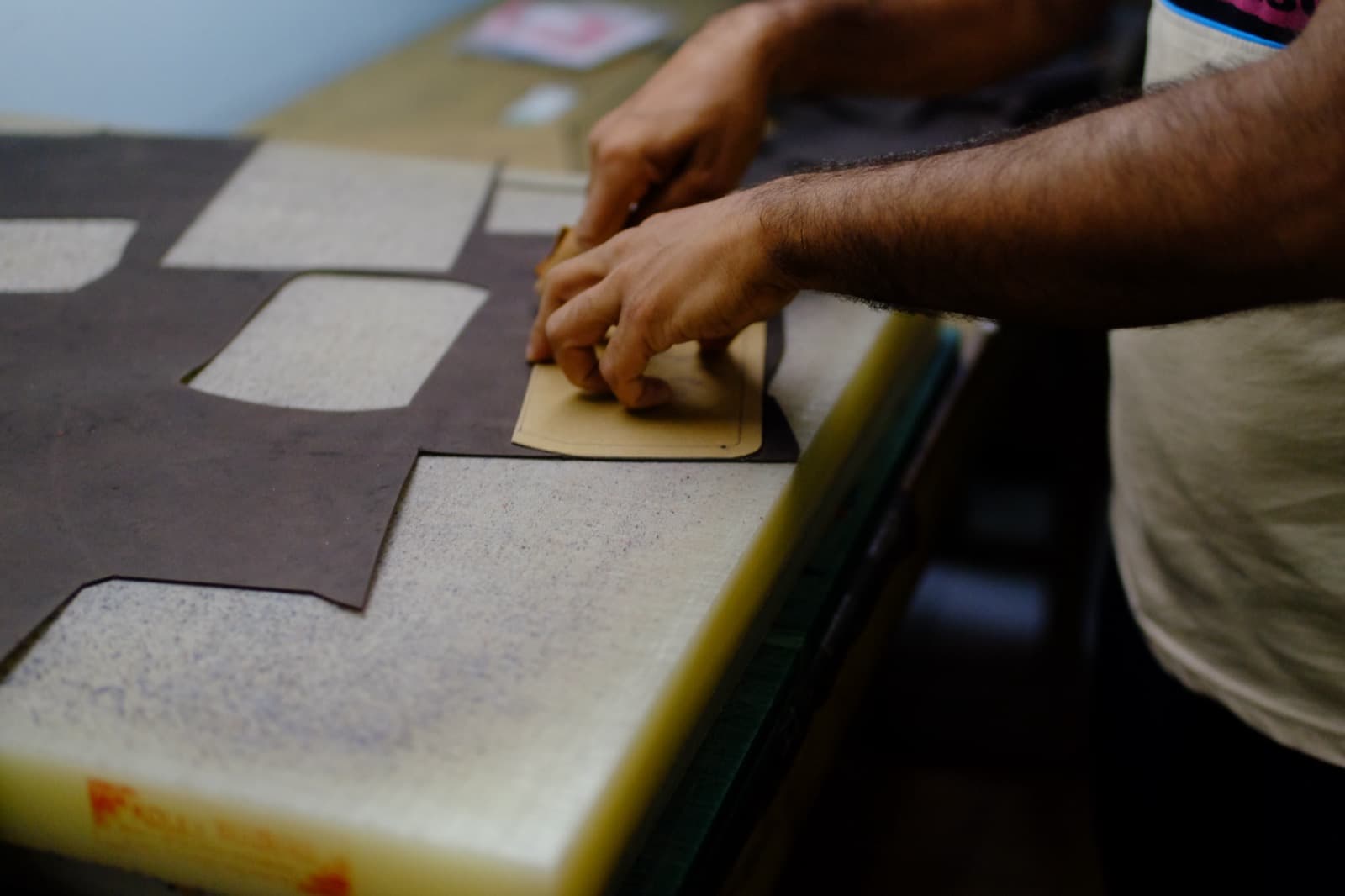
A bag tech pack is the document a manufacturer builds your sample and bulk order from. It should cover flat sketches, dimensions and measurement points, a bill of materials, hardware, construction and stitching notes, edge finish, lining, colourways, logo placement, labels and packaging, and quality tolerances. Below is what each section should contain, a template you can copy, and a worked example for a tote.
You don't need a perfect tech pack to start. Many manufacturers, MKS included, can develop a bag from a sketch or a reference sample. But the tech pack is where your decisions are written down, and a clear one is what makes the bulk order match the sample.
Why a tech pack matters
- Comparable quotes. Every manufacturer prices the same specification, not their own interpretation of a photo.
- Fewer sample rounds. Most revisions come from details nobody wrote down — handle drop, pocket position, thread colour.
- Consistent reorders. The second run is made to the same spec as the first, even if the people involved change.
- A shared reference. When something looks wrong in bulk, the tech pack and the approved sample settle what was agreed.
What goes in a bag tech pack
Design: sketches and measurements
- Flat sketches. Front, back, side (gusset), base and interior views, drawn flat and in proportion rather than as fashion illustrations. Number a callout for every component: handles, pockets, closures, feet, strap attachments.
- Dimensions. Width, height and depth, plus handle drop, strap length and adjustment range, and the size and position of each pocket. State the unit, and the measurement point — is the width taken at the base or the top opening? For soft bags, say whether it's measured flat or filled.
- Reference images. Photos of bags with details you like, marked up. A reference clarifies intent, but it doesn't replace dimensions.
Materials and construction
- Bill of materials (BOM). Every material and where it goes: main leather (type, tannage, finish, thickness in mm or ounces — one ounce is roughly 0.4 mm), lining, stiffeners and reinforcement, thread, zips, webbing. Attach swatches or supplier references if you have them.
- Hardware. Each item with type, size, finish and quantity per bag: buckles, D-rings, rivets, magnetic snaps, zips and zip pulls, feet, swivel clips. Mark whether it's stock or custom with your logo — custom hardware has its own minimums.
- Construction. Seam types (turned, raw-edge, piped), where reinforcement goes, how handles and straps are attached, and the closure.
- Stitching. Machine or hand stitching, stitch length, thread colour and weight, and any decorative stitching. Hand saddle-stitching is strong and costs more labour, so say exactly where you want it.
- Edge finish. Painted, burnished, turned (folded) or raw, and the edge colour. The choice changes both the look and the labour cost.
- Lining and interior. Lined or unlined, lining material and colour, and the layout of interior pockets, slots and key clips.
Colour, branding, packaging and quality
- Colourways. For each colour, list the main leather, lining, thread, edge colour and hardware finish. A table prevents the 'tan bag with black thread' surprise.
- Branding and logo placement. Method (deboss, emboss, foil, metal plate, print), vector artwork, size and exact position measured from fixed edges.
- Labels and tags. Brand label, care label, country-of-origin label and hangtags, with content and placement. Check the labelling rules in the markets you sell to.
- Packaging. Dust bag, tissue, shape-holding stuffing, polybag or box, and how many per carton. Add carton markings if your warehouse needs them.
- Quality and tolerances. Acceptable tolerance on key dimensions, what counts as a defect (loose threads, glue marks, uneven edges, scratches on front panels), and which natural leather marks you'll accept, and where.
Bag tech pack template
Copy these sections into a document or spreadsheet. One page per section is plenty for a simple tote; a structured handbag may need more.
- Cover page — brand, style name and number, version and date, contact person, target price, order quantity, target delivery date.
- Flat sketches — front, back, side, base and interior, with numbered callouts.
- Measurement sheet — each measurement point, its value, unit and tolerance.
- Bill of materials — component, material, colour, thickness, supplier or reference, quantity per bag.
- Hardware list — item, size, finish, quantity per bag, stock or custom.
- Construction and stitching — seam types, stitch length, thread, reinforcements, attachment methods.
- Edge finish — method and colour for each edge.
- Lining and interior — material, colour, pocket layout.
- Colourway table — one row per colourway, one column per component.
- Branding — artwork, method, size and position.
- Labels, tags and packaging — content, placement, packing method, carton marks.
- Quality standards — tolerances, defects list, approved sample reference.
- Revision log — what changed, when, and who approved it.
Tote bag tech pack: a worked example
For a simple unlined leather tote, the essentials fit on two pages. The figures below are illustrative, not a recommendation:
- Body: full-grain leather, 1.4–1.6 mm, cognac. 38 cm wide × 34 cm high × 12 cm deep, width measured at the base, flat.
- Handles: two, 2.5 cm wide, double-layer leather, 25 cm drop, riveted and stitched to the inside of the body.
- Interior: unlined, one slip pocket 18 × 15 cm centred on the back wall, 5 cm below the top edge.
- Edges: burnished, natural colour.
- Stitching: machine, tan thread, stitch length to match the approved sample.
- Branding: blind deboss, 4 cm wide, centred on the front panel 5 cm below the top edge.
- Packaging: cotton dust bag with printed logo, tissue stuffing, one per polybag.
- Tolerance: ±5 mm on body dimensions, ±3 mm on handle drop.
Common tech pack mistakes
- Dimensions with no measurement points, so 'width' is measured in two different places.
- 'Brown leather' instead of a specification — type, tannage, finish, thickness and a swatch.
- No colourway table, so thread, edge and lining colours get guessed.
- Design changes agreed by message but never added to the file. Keep a version number and a revision log.
- Custom hardware specified without checking its minimum order.
No tech pack? Start from a sketch
If you have a sketch, a reference bag or annotated photos, that's enough to begin. A pattern maker turns it into a first sample, and the decisions made during sampling become your tech pack. Write them down as you go: by the time you approve the pre-production sample, you should have every section above filled in.