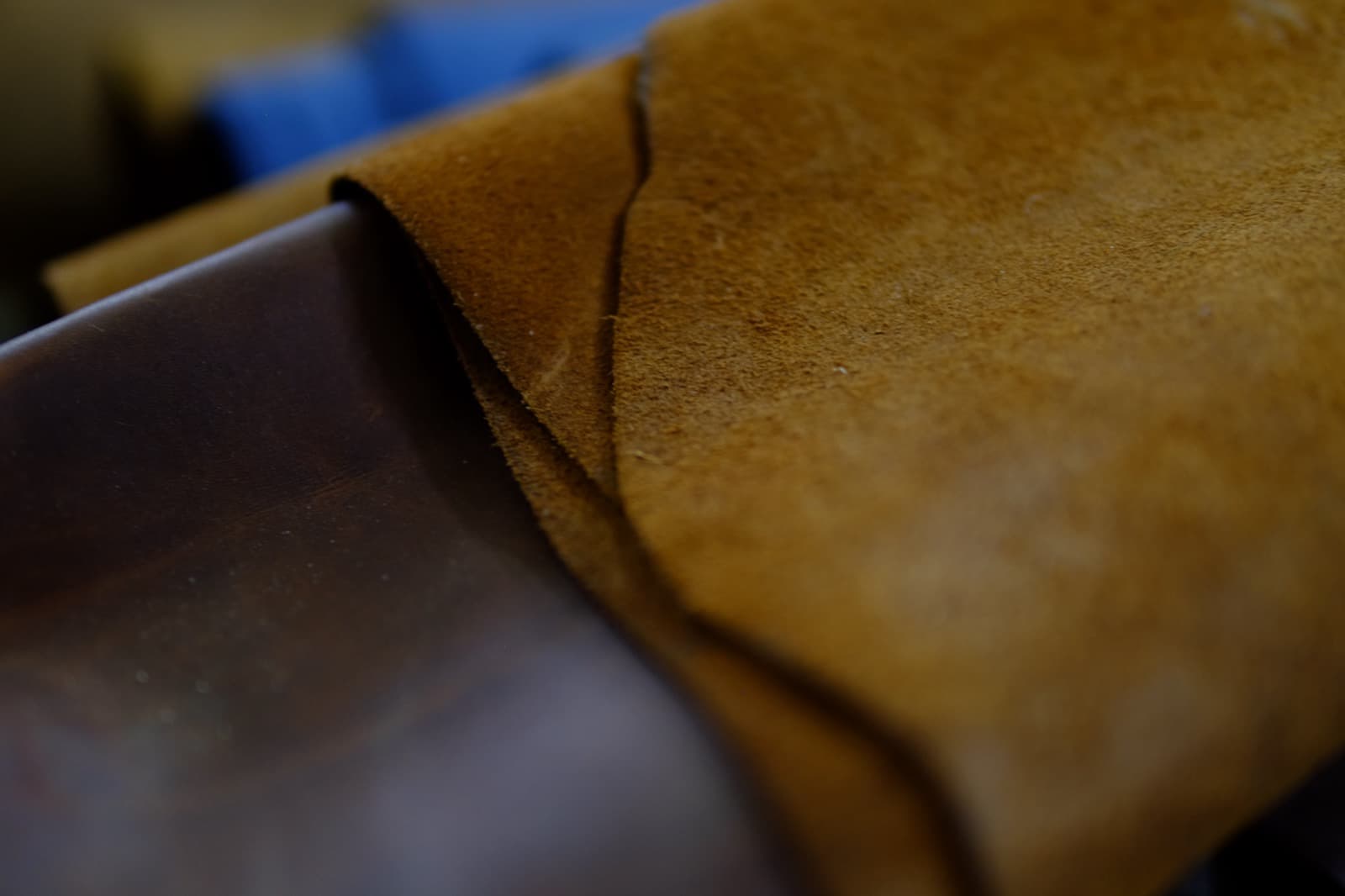
Leathers & fabrics, chosen for how they age.
A buyer's guide to the materials we manufacture with — how each leather looks, wears and is priced, and which products it suits best. Every hide comes from OEKO-TEX, LWG or GRS certified suppliers.
- Minimum order
- 50 pieces
- Sample turnaround
- 5–7 days
- Production lead time
- 4–8 weeks
- Shipping
- FOB Kolkata
Full grain leather
The top layer of the hide with the natural grain left intact — the strongest and longest-lasting leather, and the one that develops the richest patina. Small natural marks are part of its character. Best for premium totes, briefcases, weekenders and wallets meant to last decades.
Vegetable tanned leather
Tanned with plant tannins rather than chromium salts. It starts firm, takes embossing and hand-painting beautifully, burnishes to a glassy edge and darkens with use. Ideal for structured bags, belts, journal covers, keychains and card holders — and a strong story for sustainability-minded brands.
Smooth leather
A refined, even surface with consistent colour from piece to piece. Softer in hand and very versatile — our everyday choice for crossbody bags, fashion bags, women's wallets and small goods where a clean, uniform look matters and price needs to stay accessible.
Embossed leather
Leather pressed with a texture — croc, pebble, lizard or your own pattern. Embossing adds visual interest and helps hide wear, which makes it popular for fashion bags, clutches and wallets.
Shanti Leather (upcycled)
Our own upcycled line. Offcuts collected from the cutting room are pieced and stitched into new products — coin purses, pouches, lipstick cases and patchwork accessories — so less leather goes to waste and every piece is one of a kind.
Canvas, jute and textiles
For bags we also work in heavy cotton canvas and natural jute, often trimmed with leather. Our textile team produces scarves, stoles and shawls in pure silk, cotton, linen, modal, bamboo and wool, and hand-quilted kantha for scarves and home textiles.
Frequently asked questions.
What is the difference between full grain and vegetable tanned leather?
Full grain describes which layer of the hide is used — the top layer with its natural grain intact. Vegetable tanned describes how the hide is tanned — with plant tannins instead of chromium. A leather can be both: full grain, vegetable tanned leather is one of the most durable and best-ageing options for bags.
Which leather is best for bags?
For premium bags that should last decades, full grain. For structured shapes, embossing or a natural patina, vegetable tanned. For a uniform look at a more accessible price, smooth leather. We help you choose during sampling based on your design and target price.
Where do you source your leather?
From certified tanneries — OEKO-TEX, LWG (Leather Working Group) and GRS certified suppliers — and every hide is graded by hand before it reaches our workshop.
What is your minimum order quantity (MOQ)?
Our MOQ starts at 50 pieces per style, which makes MKS a practical partner for startups and small brands testing a first collection as well as established labels running repeat orders of several thousand units.
Tell us what you're making.
Share a sketch, tech pack or reference product. We reply within 24 hours with materials, pricing and a sampling timeline.